Some movies are fairly simple in execution, with linear plot progressions and clear protagonists/antagonists that are easy to root for/hate. Other movies adopt a more abstract approach, with unreliable narrators, twisted timelines, and open endings that leave the viewer to wrestle with their own moral convictions and beliefs.
And then, there’s Inland Empire (dir. David Lynch) and On The Silver Globe (dir. Andrzej Zulawski). While the plot structures and genres of these movies are different, both of them evoke the same feeling of “I’m not sure what I just watched…I think I liked it though?”
——-
On The Silver Globe is described as a sci-fi film, and it follows a team of astronauts who have crashed on an Earth-like planet while fleeing their society in hopes of establishing a new one that aligns more with their values. As they begin to produce offspring, the original astronauts become mythical figures in their society. Much later on, another astronaut arrives on the planet, and is viewed as a messiah. As he gains power and authority, it causes friction between the existing groups on the planet.
The film reminded me a little bit of the short story collection, The Martian Chronicles, by Ray Bradbury, particularly the last story in the book, The Million Year Picnic. Amongst the heavily philosophical dialogue and the fascinating character designs in the film, the general message of the film seemed to talk about how humans are fixed in their behaviors. It doesn’t matter if we discover another planet in the future and colonize it in hopes of a new life. Our ideals and our natural behaviors will never change, and we will bring conflict, death, and destruction with us, no matter where we go.
A very unique style of storytelling is used in this film, which was born out of necessity. In 1977, when around 70-80% of the film was completed, the Polish communist government banned and shut down production of On The Silver Globe, as they believed the film was too critical of the current government, and ordered all footage, costumes and props to be destroyed. Once the film was allowed to be released later on in the 80s, Zulawski decided to fill in the gaps of the movie with his own voice-overs over random footage of the streets of Poland, explaining what was supposed to happen at that point in the movie.
I think on the first watch, this film is something you feel, rather than understand completely. It’s an incredibly ambitious film, and I wonder what the complete work would’ve looked like had it not been shut down before completion.
——-
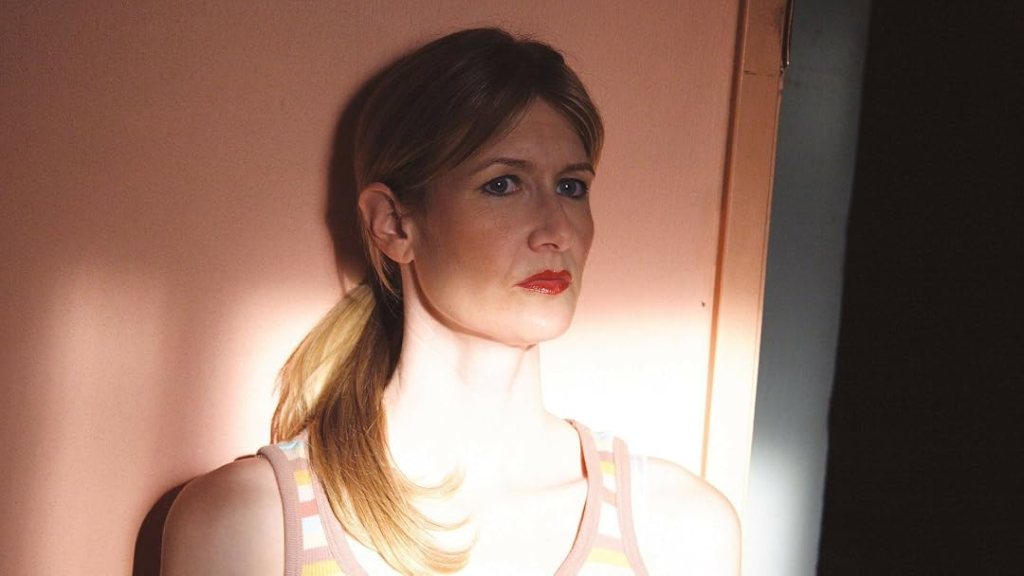
Inland Empire stars Laura Dern as an actress named Nikki who stars in a film rumored to be cursed because the actors from the original unfinished production were both murdered. The lines between reality and fiction begin to be blurred as Nikki is unable to differentiate between her real life and the movie production. It’s sort of a film inside of a film, with a lot of different subplots that feel thematically similar, but not quite connected plot wise, making Inland Empire an unsettling psychological horror.
Do I understand every single part of this film? Absolutely not. It makes sense that Lynch filmed this movie without a completed script, because the film does feel like a hodgepodge of “what the hell is going on” at times (there’s a subplot involving an unsettling, Lynchian sitcom involving rabbits in a living room, another clip where a bunch of prostitutes dance to “The Locomotion” and then disappear into thin air), but I don’t feel that “understanding” the film is vital to the viewing experience. Lynch described the film as being about “a woman in trouble”, and that’s all you really need to know when you watch the film.
Sometimes it truly is all about the vibe when it comes to Lynch (off the top of my head, I’m reminded of the scene in Twin Peaks where Audrey Horne stands up and starts dancing in the Double R Diner, and how it came to fruition because David Lynch just wanted her to dance in the diner that day). As Lynch’s first film entirely shot on digital, Inland Empire feels like a found footage horror film that takes you deep into the rabbit hole with no end in sight.
——-
So, if you ever have six hours to spare on night, and you want to be taken on two crazy, unique, challenging cinematic journeys, this is the perfect double feature for you!


Leave a Reply